As the first England vs India test match starts in Headingley, Leeds, today I’m sure that, if he were still around, keen cricket fan & physicist William Astbury would have taken a break from trailblazing science to stroll through the Len Hutton gates opposite his home on Kirkstall Lane and enjoy the game.
And as she was reputed to be a bit handy with a cricket bat (as well as X-ray crystallography), I reckon that physicist Florence Bell who, working in Astbury’s lab in 1938, first showed that X-rays could reveal the regular, ordered structure of DNA, might well have joined him.


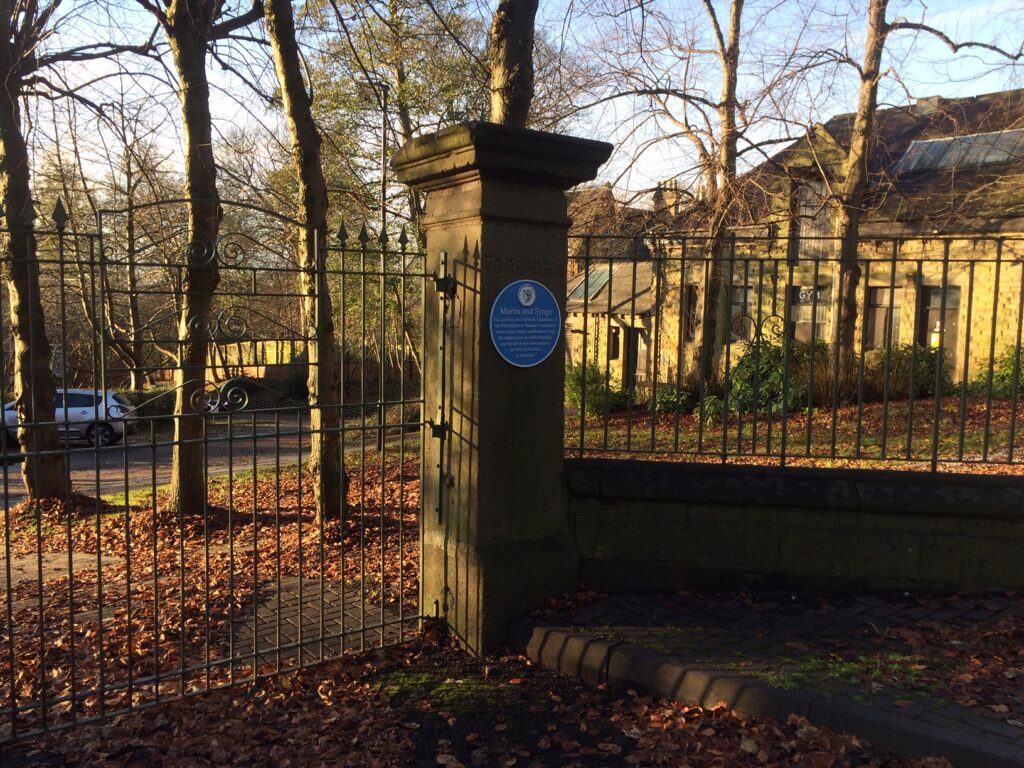
And although I don’t know whether scientists Archer Martin & Richard Synge were cricket fans meanwhile, their 1952 Nobel Prize awarded for work done in a lab only 5 mins walk from the cricket ground is another reason for Headingley to be on the map today – a little historical gem for the crowds of international visitors to look out for on their way to the ground!

And finally – not to forget father and son science team, William & Lawrence Bragg who lived on Grosvenor Rd, Headingley & who jointly won 1915 Nobel in Physics for groundbreaking method of X-ray crystallography that eventually unravelled DNA structure (amongst others!). So good luck England today, but even if things don’t work out on the cricket pitch – there’s still plenty for Headingley to be proud of!
